


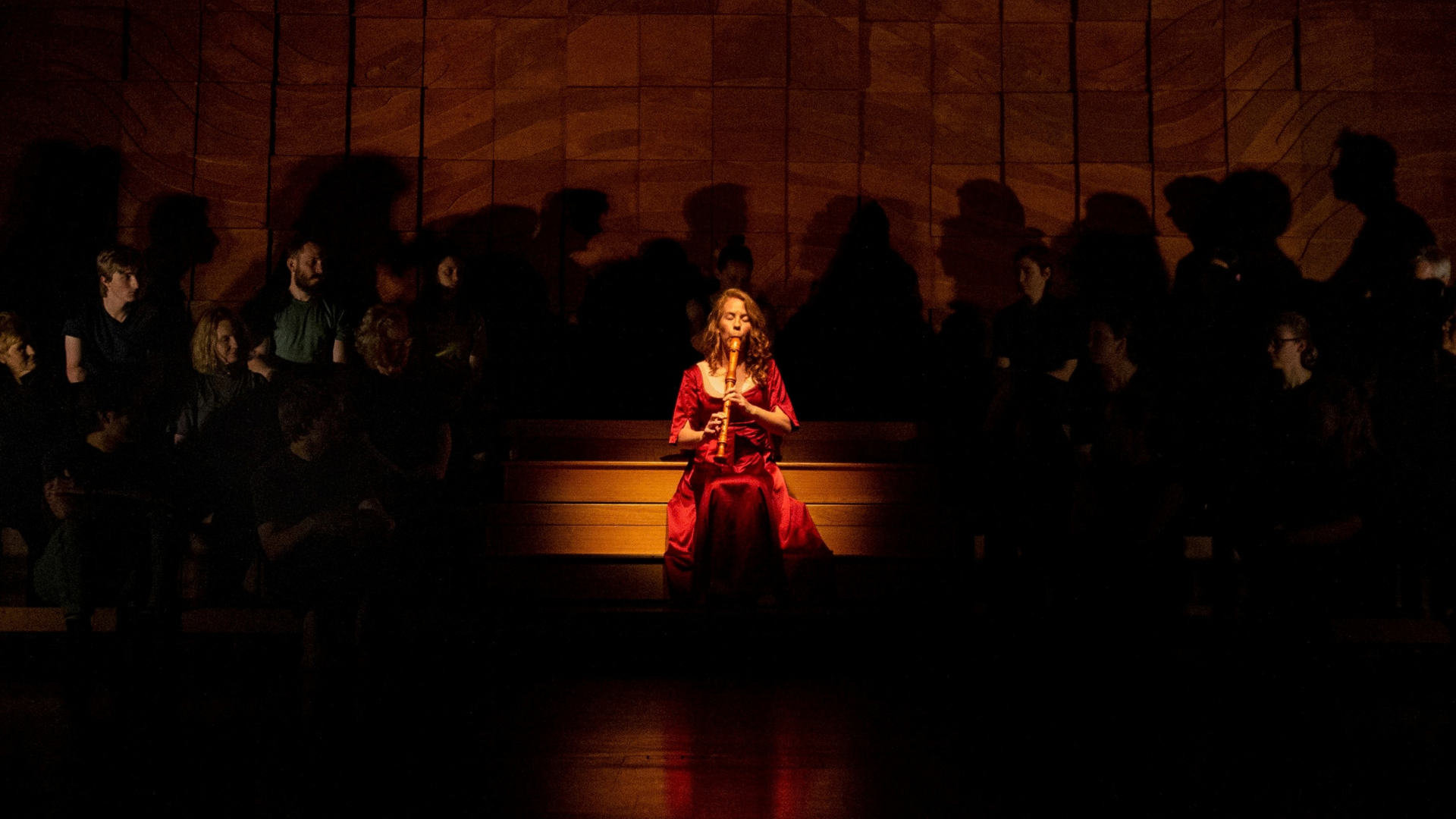
Genevieve Lacey returns to CSO for a program of reinvention and Mozartian drama.
While Clara Schumann originally wrote her Three Romances, Op. 22, for violin and piano, Danish composer Benjamin de Murashkin’s orchestrations take this music from the salon to the stage of Llewellyn Hall, infusing Schumann’s melodies with vivid new instrumental colours.
Elena Kats-Chernin’s playful Re-Inventions for recorders and strings go a step further than orchestration. The composer found fertile ground in Johann Sebastian Bach’s Two-part Inventions for keyboard and was intrigued by the idea of taking them ‘in completely different directions.’ Kats-Chernin wrote this music for ARIA Award-winning recorder player Genevieve Lacey, who returns to CSO to showcase the characters of the descant, tenor, bass and sopranino recorders.
We finish with Mozart, who wrote his dramatic Symphony No. 40 in G minor in the summer of 1788, the central symphony in his ‘final trilogy’. Beginning with one of the most recognisable opening passages in classical music, the symphony emerged from Mozart’s interest in the Sturm und Drang (storm and stress) movement, a precursor to the intense emotion of the romantic period. Mozart balances this darkness, however, with what Robert Schumann described as ‘weightless, Hellenic charm’. Australian-British conductor Toby Thatcher makes his CSO debut conducting this program.
PROGRAM
Clara Schumann
Three Romances, Op.22
(orchestrated by Benjamin de Murashkin)
Elena Kats-Chernin
Re-Inventions for recorders and strings
(based on J.S. Bach’s Two-Part Inventions)
Wolfgang Amadeus Mozart
Symphony No. 40 in G minor, K.550
ARTISTS
Toby Thatcher: conductor
Genevieve Lacey: recorders
Canberra Symphony Orchestra